Loading...
HomeVisasDestination Thailand
How We Help
Destination Thailand
Visa (DTV)
What we do for clients applying for the DTV — financial evidence review, remote work documentation, in-country extensions and tax residency advice, before the application reaches an embassy.
How We Help
What happens when you instruct us
Four things we do on every DTV instruction — before anything reaches an embassy.
1
We Review Your Financial Evidence Before Submission
The 500,000 THB must be held and clearly evidenced for at least three months before the application date. A single recent deposit for the full amount is the most common reason DTV applications are rejected. We review bank statements before anything reaches an embassy, not after a rejection.
2
We Prepare Your Remote Work or Soft-Power Documentation
Embassies want to see that income genuinely originates outside Thailand. We advise on what contracts, invoices, company documentation or soft-power activity evidence is required for your specific category, and how it should be presented to pass scrutiny.
3
We Handle In-Country Extensions
The 180-day extension must be filed at the Immigration Office before the initial stay expires. We prepare the application, attend the Immigration Office submission and ensure nothing lapses while you are in-country.
4
We Advise on Tax Residency Before You Commit to a Long Stay
Spending 180 days or more in Thailand in a calendar year makes you a Thai tax resident regardless of visa type. We give this advice before you plan the stay — not after the Revenue Department raises the question.
DTV Quick Reference
Key facts at a glance
These figures govern every DTV application. We keep them current against embassy practice — not just the published regulation.
Validity5 years, multiple entry.
Stay Duration180 days per entry.
ExtensionExtendable once for a further 180 days at the Immigration Office before the initial stay expires.
Work RightsRemote work for foreign employers permitted. No Thai work permit is issued. Local employment is prohibited.
Financial Proof500,000 THB held in a bank account for at least 3 months before application.
Visa Fee10,000 THB approximately; varies by embassy.
FamilyLegal spouse and children under 20 included.
Police ClearanceFrom 31 August 2026, a criminal record / police clearance certificate issued within the previous 6 months is required for DTV applications. For applications through the Royal Thai Embassy London, dependants under 16 may submit the primary DTV holder's police clearance certificate instead of obtaining their own.
90-Day ReportingRequired if staying in Thailand continuously.
Where to ApplyApplications are made through Thailand's official e-Visa system while the applicant is outside Thailand. From 31 August 2026, DTV applicants must provide proof of permanent residence rather than simply evidence of their current location. Applications should therefore be made through the Thai embassy or consulate responsible for the applicant's country or jurisdiction of permanent residence. Applicants permanently resident in the UK, Ireland or the British Overseas Territories apply through the Royal Thai Embassy London.
What We Do For Our Clients
The work behind the application
"We handle your DTV application" covers a specific set of tasks. Here is the actual scope of what we do on your file.
Bank Statement Review and Financial Seasoning Advice
We review your bank statements to confirm the 500,000 THB balance has been held for the required three-month period before the application date. Where the seasoning period has not been met, we advise on the timeline required — not on shortcuts.
Q
Does the 500,000 THB need to be held in a Thai bank account?
No. The funds can be held in an overseas bank account. The requirement is that the balance is genuine, clearly stated on an official bank statement, and has been held at that level for at least three months before the application date. A single recent deposit that brings the balance up to the threshold is a common reason for rejection — the seasoning period is as important as the amount.
Remote Work Evidence Package
For applicants whose basis is remote employment or freelance work, we advise on what the embassy requires: employment contracts, company registration documents, invoices showing foreign-sourced income, or a combination. Different embassies ask for different formats.
Q
Can I do freelance work on a DTV?
Yes, provided your clients and contracts are outside Thailand. You cannot invoice Thai companies, work for Thai employers, or operate locally. The income must demonstrably originate and be remunerated outside Thailand. If you are unsure whether your working arrangement qualifies, this is exactly the question we answer before you apply.
Soft-Power Category Assessment
For applicants whose basis is a soft-power activity — Muay Thai training, Thai cooking, wellness, medical treatment, language study or seminar attendance — we confirm which category applies and what documentation that category currently requires.
Extension Applications at the Immigration Office
The 180-day extension must be filed before the initial stay expires. We prepare the extension application package and manage the Immigration Office submission so you are not navigating the bureaucratic process alone mid-stay.
Q
What happens if I want to stay longer than 180 days without leaving?
You can apply for a single 180-day extension at an Immigration Office in Thailand before the initial stay expires. After that extension is used, you would need to travel out of Thailand and re-enter on your DTV to begin a new 180-day stay. We handle the extension application and attend the Immigration Office submission.
Family Inclusion Applications
A legal spouse and children under 20 can be included on the same DTV application. We prepare the supporting family documentation — marriage certificates, birth certificates, relationship evidence — for the combined application. From 31 August 2026, a police clearance certificate issued within the previous 6 months is required for every applicant, including dependants; for applications through the Royal Thai Embassy London, those under 16 may submit the primary DTV holder's certificate instead of obtaining their own.
Q
Can my family apply with me?
Yes. A legal spouse and children under 20 can be included on the same DTV application. Each family member requires their own supporting documents — marriage certificate and birth certificates as applicable. From 31 August 2026, a criminal record / police clearance certificate issued within the previous 6 months is required for every DTV applicant, including dependants; for applications through the Royal Thai Embassy London, dependants under 16 may submit the primary DTV holder's certificate instead of obtaining their own. We prepare the combined application and ensure all family documentation meets embassy requirements.
Tax Residency Advice for Long-Stay Holders
If you plan to spend six months or more in Thailand in a single year, we advise on the 180-day tax residency threshold and what it means for your income structure, double taxation treaty position and reporting obligations before you commit to the stay.
Q
Does staying on a DTV make me a Thai tax resident?
If you spend 180 days or more in Thailand within a calendar year, yes — the tax residency threshold applies regardless of visa type. That does not automatically mean Thai tax is owed on your foreign income, but it does create reporting obligations and possibly tax liability depending on your country's double taxation agreement with Thailand. We advise on this before clients commit to a long continuous stay.
Our Commitment To You
What you can hold us to
Evidence Reviewed Before It Reaches the Embassy
We do not submit applications blind. Every financial evidence package is reviewed against current embassy practice — not just the published regulation, which is often behind what embassies are actually asking for. If there is a problem with the evidence, we find it before the embassy does.
We Tell You What the Visa Cannot Do as Well as What It Can
The DTV does not authorise local employment, does not convert to a work permit and does not protect you from Thai tax residency. We make sure every client understands all three before they apply — not after they have structured a plan around assumptions the visa does not support.
Q
Can we apply for the DTV while already in Thailand?
No. The DTV must be applied for from outside Thailand through the Thai e-Visa platform. There is no in-country conversion route. If you are already in Thailand on another visa type and want to transition to the DTV, you must exit the country first and apply from abroad.
We Do Not Promise Visa Outcomes
Visa decisions belong to the Thai Embassy or Consulate. We prepare applications correctly — we do not guarantee approval. Any adviser who promises a visa outcome is not being straight with you. What we can promise is that your evidence will be in the best possible order when it is submitted.
One Contact for Application and Extension
The same person who reviews your financial evidence and prepares your initial application handles your in-country extension when it becomes relevant. You are not re-explaining your situation to a different team six months into your stay.
Who You'll Work With
Real people, not a case number
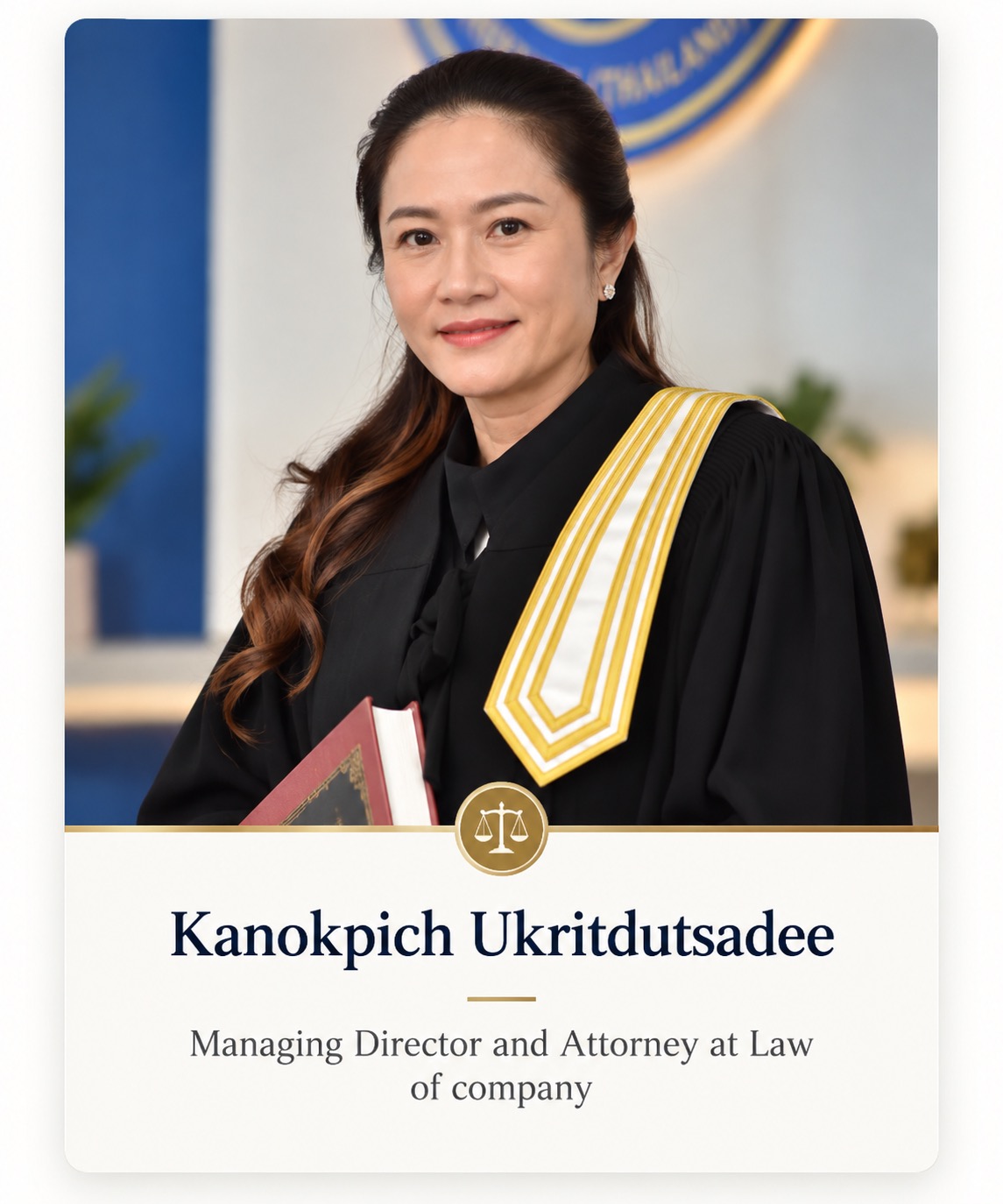
Kanokpich Ukritdutsadee (Lawyer Pook)
Managing Director & Lead Barrister
Leads DTV application review — responsible for financial evidence assessment, documentation advice and ensuring every application is prepared to pass embassy scrutiny on the first submission.
"The DTV is generous compared to almost every other long-stay route into Thailand, and that generosity is exactly why people misunderstand it. It is not a work permit, it is not a path to local employment, and staying too long in a single tax year has consequences most applicants have not thought through before they arrive."
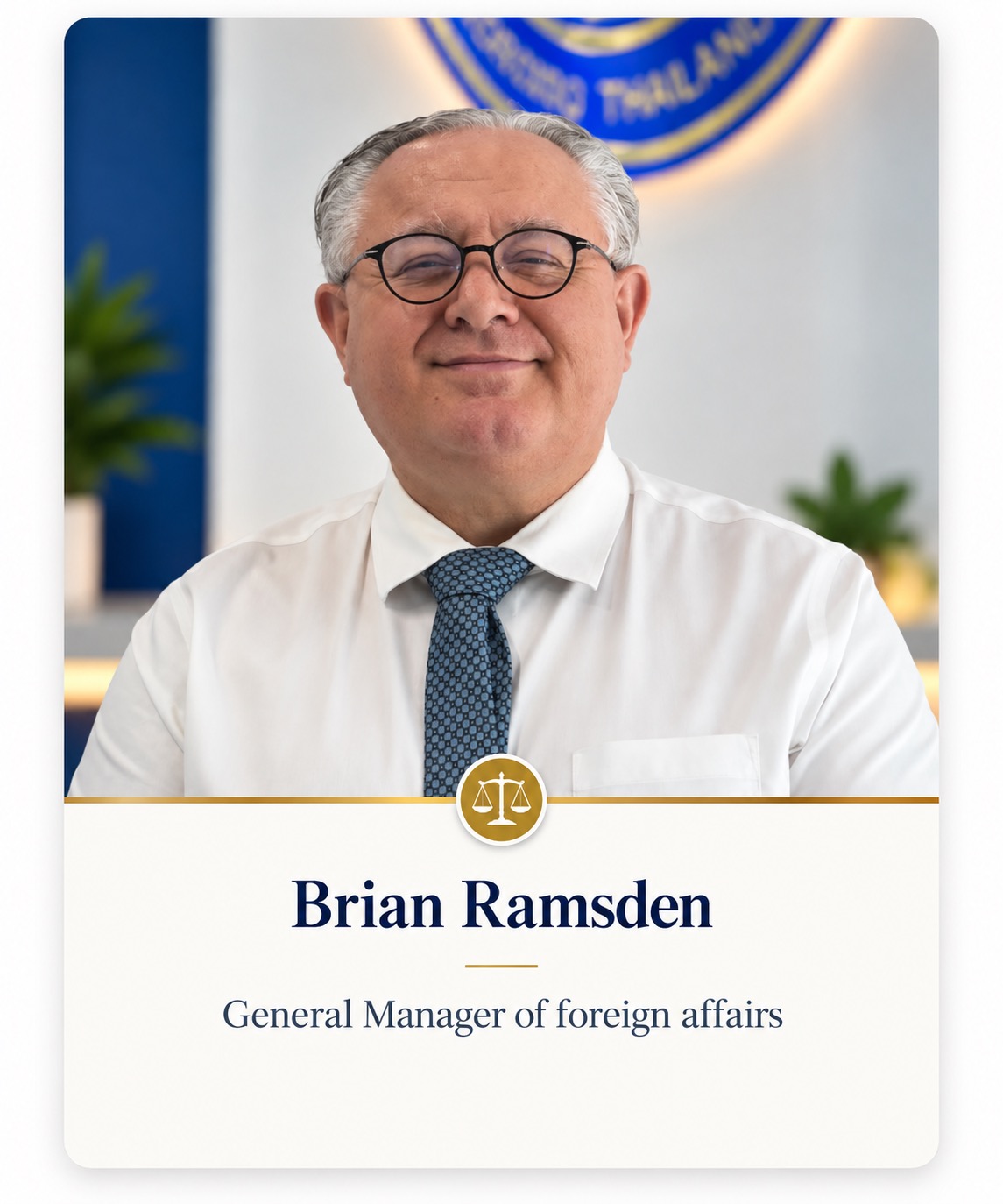
Brian Ramsden
General Manager of Foreign Affairs
Your point of contact throughout the application and extension process — coordinates document collection, liaises with the Immigration Office for extensions and keeps you informed at each stage.
Related Visa Routes
Other long-stay options
The DTV suits remote workers and soft-power applicants. Different circumstances call for different routes.
DTV Visa Guide
→Full factual guide: key facts, what you can and cannot do, checklist and key takeaways before applying.
LTR Visa
→10-year visa for high-net-worth individuals and remote professionals. Higher financial thresholds, stronger long-term security.
Thailand Privilege Card
→5 to 20 year membership visa. No ongoing work permit administration — suited to retirees and long-term residents.
Retirement Visa
→Compare Non-O, Non-OA and Non-OX pathways — the most established long-stay routes for retirees over 50.
Compare All Visa Options
→Every long-stay Thailand visa route compared side by side — validity, financial requirements, work rights.
Lawyers for Expats Thailand, 2026. The content of this page is general legal information and does not constitute legal advice for any specific matter. Please contact us for advice on your individual circumstances.