Loading...
HomeFamily Law

How We Help
Legal Guardianship of Minors.
Court-appointed guardianship when a parent is deceased or incapacitated — Family Court application, guardian duties and authority, and coordination with estate administration for minor beneficiaries.
How We Work
From Assessment to Appointment
01
We Assess Whether a Court Order Is Needed — and Who Should Apply
Not every situation that looks like it requires guardianship actually does. We assess the circumstances first — whether the surviving parent already holds parental authority, whether a foreign order might be recognised, and who among the available family members or associates is the most suitable applicant. Clarity before filing avoids applications that will not succeed or that appoint the wrong person.
02
We Prepare the Full Application
We prepare the Family Court application, compile all supporting documentation — the applicant's relationship to the child, the circumstances making guardianship necessary, evidence of suitability — and coordinate any background or welfare assessment the court requires. Application quality matters. A properly prepared application reaches appointment faster and with fewer procedural delays.
03
We Represent You at the Family Court Hearing
We present the guardianship application at the Family Court hearing. Where the court requires a welfare assessment first, we manage that process and return for the hearing once it is complete. The appointment order specifies the guardian's authority. Where appropriate, we advise on whether to seek full authority or to request a limited order.
04
We Advise the Appointed Guardian on Their Ongoing Duties
Appointment is the beginning of a legal relationship with the court — not the end of it. We advise appointed guardians on their authority and its limits, identify the decisions that require separate court approval, and manage those additional applications when they arise. Where guardianship coincides with estate administration, we coordinate both processes so neither is held up waiting for the other.
What We Do
Scope of Work
Eligibility Assessment and Application Strategy
We assess the circumstances giving rise to the need for guardianship, identify who has standing to apply, and advise on the likelihood of appointment before anything is filed. Where multiple family members could apply, we advise on who the court is most likely to appoint. Where the circumstances are not straightforward — a parent living abroad, a contested application, or a foreign guardianship order that may or may not be recognised — we advise on the available options before committing to a course of action.
Q — Do I need a court order if I'm the surviving parent?
No. As the surviving legal parent you already hold parental authority and can act as the child's legal representative without a court order. A guardianship order is required only when neither parent can act. However, if you need to deal with the child's inherited property — selling it, managing it, or withdrawing funds — that may require separate court approval in your capacity as the legal parent, distinct from the guardianship process.
Family Court Application — Uncontested Guardianship
Where the circumstances are clear and there is no competing application, we prepare and file the guardianship application at the Family Court in the province of the child's ordinary residence. We compile the full submission — relationship to the child, grounds for guardianship, evidence of suitability — and represent the applicant at the hearing. The court issues the appointment order specifying the guardian's authority.
Contested Guardianship Applications
Where more than one person seeks appointment, or where the appropriateness of a particular applicant is challenged, the matter becomes contested and requires fuller preparation. We present the applicant's case at a contested hearing, address the grounds raised against appointment, and cross-examine where necessary. The court determines appointment on the best interests of the child.
Post-Appointment: Property and Estate Decisions
Guardianship gives authority to manage the child's assets — not to deal with them freely. Selling the child's property, dealing with inherited real estate, withdrawing substantial funds or entering contracts on the child's behalf each require a separate court order. We identify when that approval is needed and manage each application. For estates where a minor child is a beneficiary, we coordinate guardianship with estate administration so both processes advance together.
Q — Can the guardian sell the child's property without returning to court?
No. A guardian has authority to manage the child's assets in an administrative capacity, but significant decisions — selling the child's property, dealing with inherited real estate, withdrawing substantial funds, entering into contracts — each require a separate court order even after guardianship is established. Guardians who act without this approval act without legal authority, which can invalidate the transaction and expose the guardian to personal liability.
Guardianship and Estate Administration — Combined Instruction
Where a child inherits through the death of a parent, the estate cannot be fully administered until the child's guardian is formally appointed. Treating them as separate matters creates delays at exactly the point where the child's inheritance must be dealt with. We handle both simultaneously under a single instruction — guardianship application and estate administration — managed together from the outset.
Q — We need to administer the estate at the same time as applying for guardianship. Can you handle both?
Yes, and this is exactly the situation where handling both together avoids the delays that arise when they are treated as separate matters. The estate cannot be fully administered until the child's guardian is formally appointed. We manage both processes simultaneously — guardianship application and estate administration — so that neither is held up waiting for the other.
Ongoing Guardian Advice and Court Approval Applications
We advise appointed guardians on their authority and its limits throughout the guardianship. When a decision arises that requires further court approval — selling the child's property, dealing with an inheritance, a change in the child's circumstances — we prepare and file the necessary application. We remain available to the guardian for advice on whether a particular decision falls within existing authority or requires a return to court.
Q — When does guardianship end?
Guardianship ends automatically when the child turns 20 years of age or marries before that age. A child between 18 and 20 still requires a legal guardian to act on their behalf in legal matters under Thai law — the age of full legal capacity in Thailand is 20, not 18.
Our Commitment
What You Can Expect from Us
No Informal Arrangements — Court Authority Only
An informal agreement between family members that one person will care for a child has no legal standing. The person acting informally cannot authorise medical treatment, enrol the child in school, access the child's Thai accounts or deal with the child's property. Only a Family Court order creates legal authority to act. We do not assist clients to document informal arrangements as a substitute for formal guardianship — we obtain the order.
We Assess Before Filing
Filing an application without first establishing that the circumstances genuinely require it — or that the proposed applicant is the right person — wastes time and creates procedural problems. We assess eligibility, standing and suitability before recommending that an application be filed.
Guardianship and Estate Combined Where Relevant
Where a minor child is a beneficiary of a Thai estate, the two processes must run together. We handle both under a single instruction and manage the coordination between them — the estate administration cannot be completed without the guardianship appointment, and delays in one create delays in the other.
Qualified Barrister Representation at Every Hearing
Every Family Court appearance in a guardianship matter is conducted by a qualified barrister. Pook — our Managing Director and Lead Barrister, 21 years qualified — leads all contested guardianship court work personally. Uncontested applications are prepared to the same standard, because a well-prepared application reaches appointment faster.
Who You'll Work With
Our Team
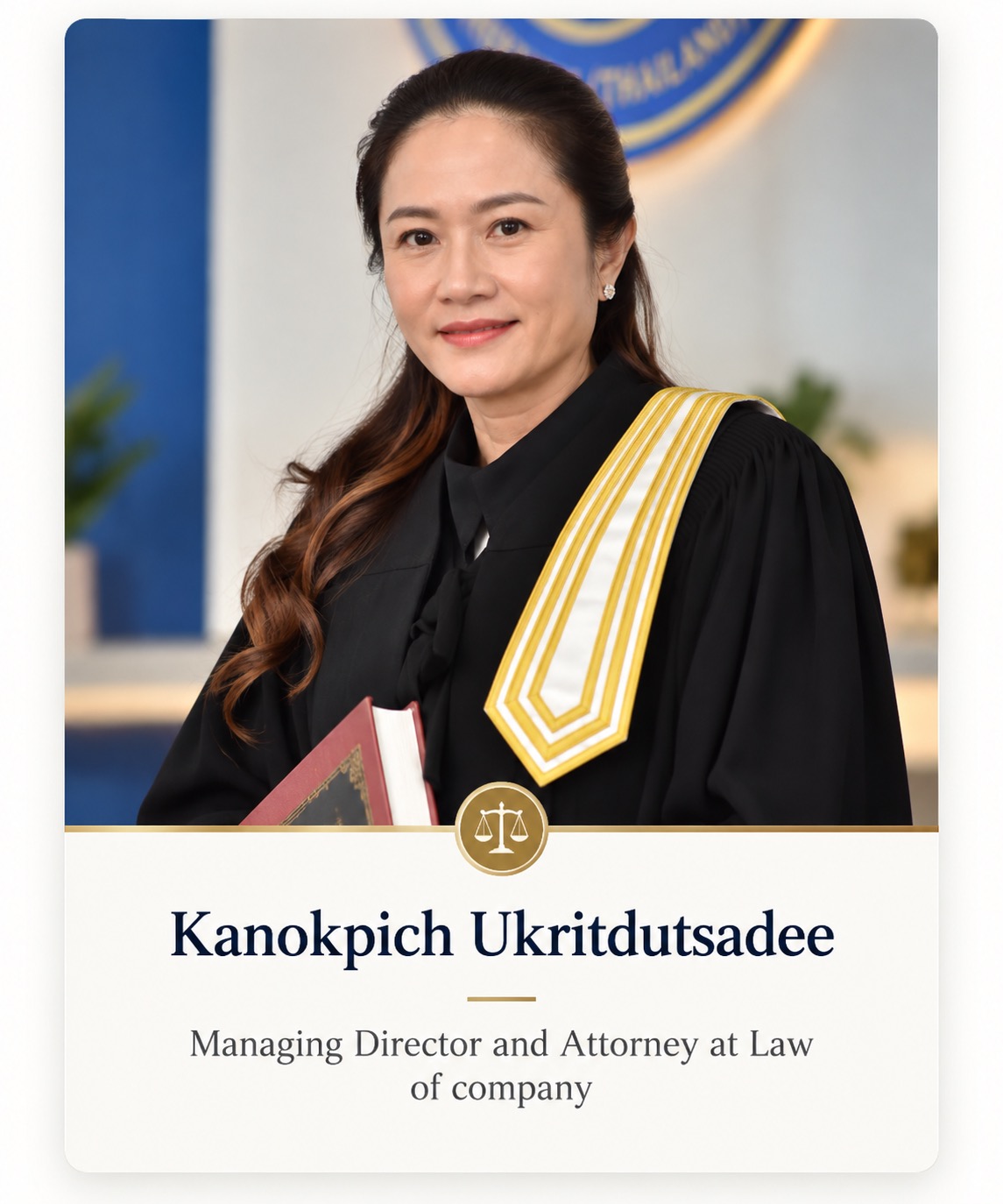
Kanokpich Ukritdutsadee
Managing Director & Lead Barrister · 21 Years Qualified
"Guardianship applications come to us in the most difficult moments — a parent has died, a family is in crisis. We move quickly to reduce the period of legal uncertainty for the child. The appointment is the beginning, not the end. We advise guardians on their ongoing duties because the authority the court grants has real limits."
Brian Ramsden
General Manager of Foreign Affairs · DBD Ambassador
Brian coordinates guardianship instructions that involve international elements — a foreign applicant seeking appointment in Thailand, a child with assets in multiple jurisdictions, or estate administration that spans Thai and foreign legal systems. He manages the liaison with foreign legal advisers and ensures the Thai and international sides of the matter advance together.

Related
Legal Guardianship Guide
→When guardianship is required, the court process, guardian duties and the estate administration connection — full reference guide.
Children & Family Rights
→Child support, adoption, legitimation and parental rights for expat families in Thailand.
Adoption in Thailand
→Intercountry, domestic and stepchild adoption — eligibility, Hague Convention process and Family Court representation.
Family Law
→All family law services — prenuptial agreements, divorce, child support, adoption and guardianship.
Lawyers for Expats Thailand — Family Law Practice. August 2026. This page does not constitute legal advice. Always obtain qualified independent legal advice for your specific circumstances.