Loading...
HomeFamily Law
How We Help
Adoption in Thailand.
Intercountry adoption under the Hague Convention, stepchild adoption and domestic adoption for long-term residents. Eligibility assessment, DCY coordination and Family Court representation.
How We Work
From Assessment to Completion
01
We Assess Eligibility Under Thai Law and Your Home Country
We review your eligibility simultaneously under Thai adoption law and under your home country's immigration and nationality requirements. Thai law sets its own eligibility criteria — age, age difference, joint application for married couples, home study, criminal background. Your home country sets its own requirements for bringing the child home. We assess both before any application is made and advise you on the realistic outcome before a single document is filed.
02
We Prepare the Full Application
We coordinate home study arrangements with accredited agencies in your home country, prepare and compile the full DCY application package, and ensure all documentation — Thai and foreign — is in order before submission. Documentation errors cause significant delays in the adoption process. We review everything before it is submitted.
03
We Represent You Before the Family Court
We prepare and present the adoption application to the Thai Family Court. The court reviews DCY approval, placement reports and all supporting documentation before issuing the adoption order. For stepchild adoptions, we manage the consent process and, where consent is refused, prepare the application for termination of parental rights. We represent you at every hearing — you do not navigate the court process alone.
04
We See the Process Through to Completion
An adoption order from the Thai court is the legal foundation — but it is not the end. After the order, the child's Thai documentation must be updated: birth certificate, Thai identification, passport. For intercountry adoption, we coordinate with your home country's immigration authorities for the visa and citizenship process. We stay involved until the family is complete.
What We Do
Scope of Work
Eligibility Assessment — Thai Law and Home Country Requirements
Every adoption instruction begins with a parallel eligibility assessment: Thai law requirements on one side, home country immigration and nationality requirements on the other. We assess both simultaneously. Families who begin the process without understanding both sets of requirements risk completing the Thai adoption only to encounter immigration obstacles that prevent the child entering their home country. We prevent that.
Q — Does a Thai adoption order automatically make the child a citizen of my home country?
No. A Thai adoption order establishes the legal parent-child relationship under Thai law. Whether the child acquires the right to live in or become a citizen of the adopting parent's home country is governed entirely by that country's immigration and nationality law — entirely separate from the Thai court order. Some countries grant automatic citizenship to internationally adopted children; others require a separate immigration application. We advise on the home country implications at the outset so families can plan accordingly.
Intercountry Adoption — Hague Convention Process
For foreign nationals adopting a Thai child from abroad, the process must go through both the adopter's home country central authority and Thailand's Department of Children and Youth. We guide families through both tracks simultaneously — home country central authority engagement, home study coordination, DCY application, matching process, placement period oversight and Family Court representation.
Q — Can a foreign national adopt a Thai child without going through the DCY?
No. Thailand is a Hague Convention signatory. All intercountry adoptions by foreign nationals must be processed through the Department of Children and Youth (DCY). Private arrangements made directly with birth families — regardless of how they are structured — are illegal under Hague-compliant procedure and will not result in a valid adoption. Any adoption not processed through official channels may also expose those involved to criminal liability.
Domestic Adoption — Long-Term Residents
Foreign nationals who have been legally resident in Thailand for an extended period may be eligible to adopt domestically through Thai channels, without going through a foreign central authority. Eligibility is assessed case by case. The Thai domestic process still requires DCY approval, a home study and a Family Court hearing. We assess eligibility and advise on the available route before any application is initiated.
Stepchild Adoption
A foreign national adopting their Thai spouse's child from a previous relationship. We manage the consent process with the biological parent whose parental rights are affected — obtaining written consent where available, and preparing the Family Court application for termination of parental rights where consent is refused. Stepchild adoption is the most common adoption matter for the expat community in Thailand.
Q — My Thai spouse has a child from a previous relationship. Can I adopt that child?
Yes. Stepchild adoption is the most common adoption matter for expat families in Thailand. You must obtain the consent of the biological parent whose parental rights will be affected — the child's other biological parent. Where consent is withheld, we apply to the Family Court for an order terminating that parent's parental rights before the adoption proceeds. We advise on the consent process before any application is filed.
Termination of Parental Rights — Contested Stepchild Adoption
Where the biological parent refuses to consent to a stepchild adoption, we prepare and file an application for a court order terminating their parental rights. The court assesses the application on the child's best interests. We advise on the strength of the application — including where the biological parent has been absent or has failed to financially support the child — before it is filed.
Q — What happens if the biological parent refuses to consent to a stepchild adoption?
Where consent is refused, we apply to the Thai Family Court for an order terminating the biological parent's parental rights. The court assesses the application on the basis of the child's best interests — not simply the biological parent's preference. Where the biological parent has been absent, has failed to financially support the child, or where other relevant circumstances apply, the court has broad powers to grant the order. We advise on the strength of the application before it is filed.
Post-Adoption Registration and Documentation
After the court order is granted, the adoption must be registered and the child's documents updated. We manage the registration process and coordinate the update of the child's Thai birth certificate, identification and passport. For intercountry adoptions, we coordinate with the home country immigration authority on the visa and citizenship application. We remain involved until the documentation is complete.
Q — How long does the adoption process take?
Intercountry adoption through the Hague Convention process typically takes two to four years from eligibility assessment to finalisation — a timeline driven by the DCY matching process and the parallel home country process, not avoidable delay. Stepchild adoption is considerably faster, typically six to twelve months where the biological parent consents, longer where a court order terminating parental rights is required. We give clients a realistic timeline at the outset based on the specific type of adoption.
Our Commitment
What You Can Expect from Us
We Never Facilitate Private Adoption Arrangements
Thailand is a Hague Convention signatory. Private adoption arrangements made directly between foreign nationals and Thai birth families are illegal — regardless of how they are structured or what documents are prepared outside the official process. We do not assist with, advise on, or facilitate private arrangements. Every adoption we handle goes through the official DCY and Family Court process. This is not a bureaucratic formality — it is the only route to a legally valid adoption.
We Coordinate the Home Country Process in Parallel
Intercountry adoption requires simultaneous progress in Thailand and the adopting parent's home country. Delays at either end hold up the overall process. We work with correspondent family law and immigration specialists in the adopter's home country so that both tracks advance together. Families who approach only the Thai side of the process — and ignore the home country side — create delays that are difficult to recover.
We Give Realistic Timelines — Not Optimistic Ones
Intercountry adoption in Thailand typically takes two to four years. We tell clients this at the first meeting. The timeline is driven by the DCY matching process and the parallel home country process — not avoidable delay. Making decisions — resigning from employment, relocating — on the basis of an unrealistic timeline creates pressure that damages families. We do not encourage optimism that the process does not support.
Qualified Barrister Representation at Every Court Hearing
Every Family Court appearance in an adoption matter is conducted by a qualified barrister — not a paralegal or junior staff member. The court hearing is the point at which the adoption order is granted or refused. It requires proper preparation and proper representation. Pook — our Managing Director and Lead Barrister, 21 years qualified — leads all contested adoption court work personally.
Who You'll Work With
Our Team
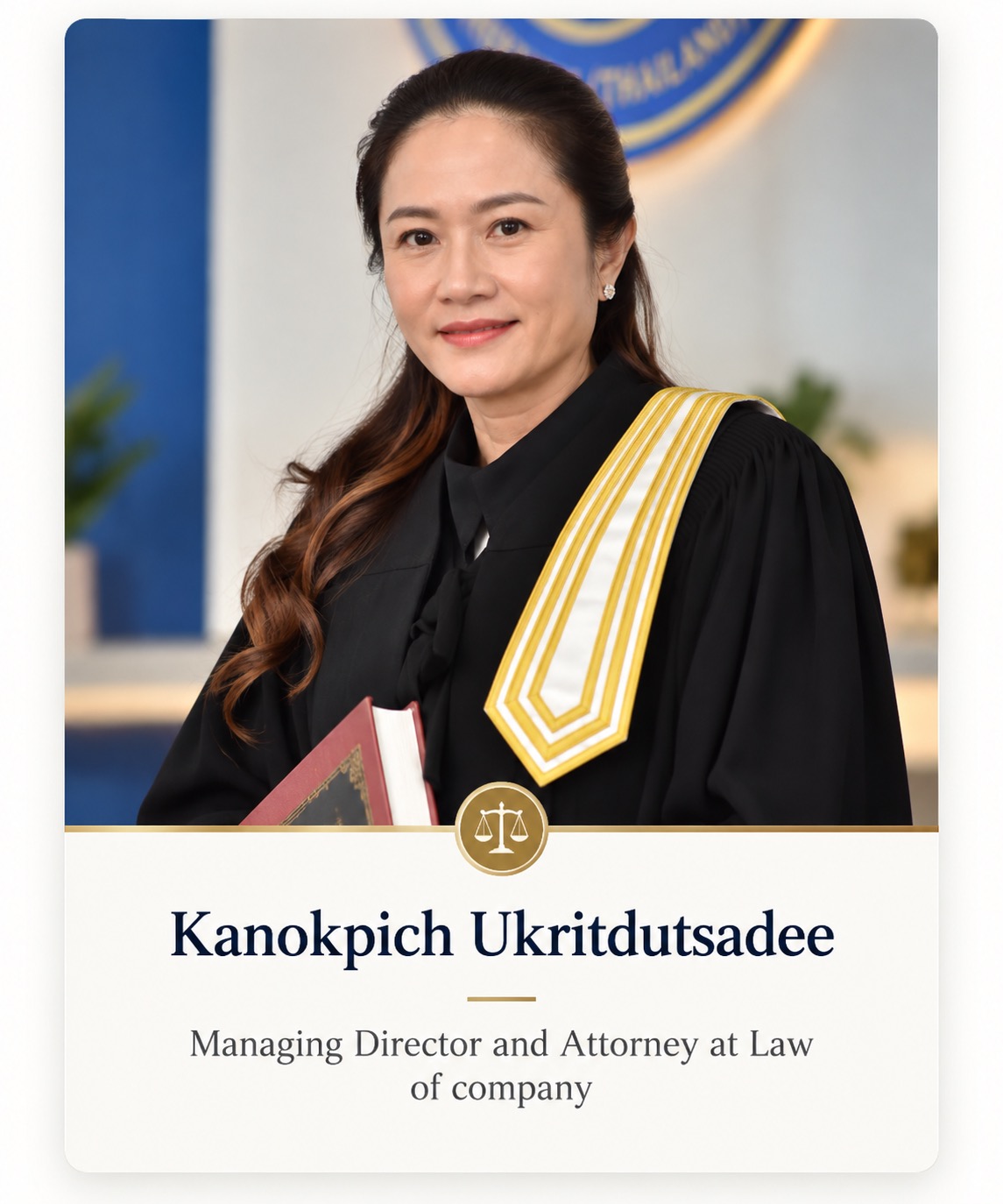
Kanokpich Ukritdutsadee
Managing Director & Lead Barrister · 21 Years Qualified
"Adoption is the most consequential legal process a family will go through. The stakes are not financial — they are human. We treat every adoption instruction with that weight. The process is long, it is demanding, and it requires a legal team that will see it through without cutting corners."
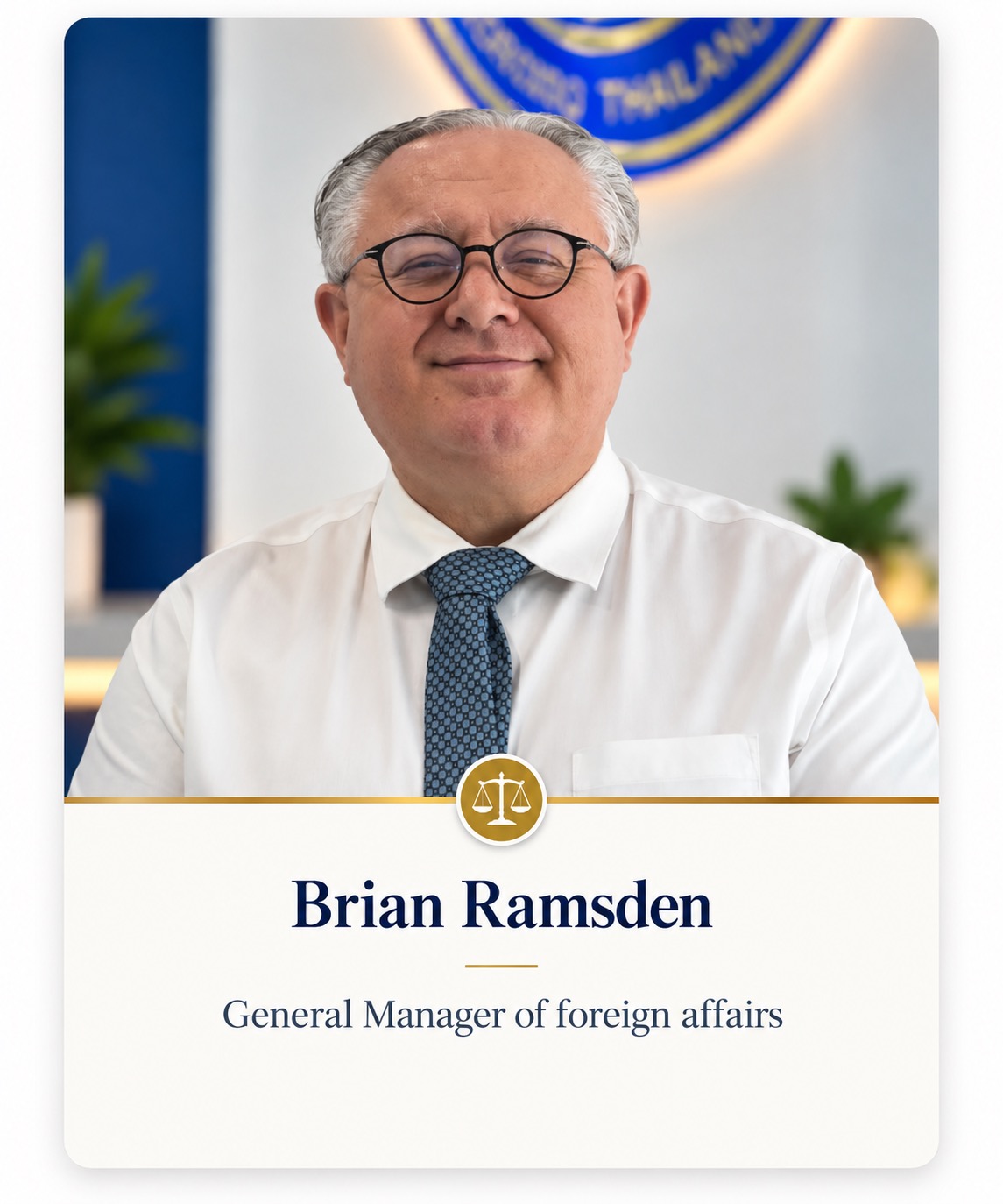
Brian Ramsden
General Manager of Foreign Affairs · DBD Ambassador
Brian coordinates all international aspects of adoption instructions — managing the liaison with home country central authorities, correspondent immigration lawyers and the home country citizenship and visa process. For intercountry adoptions, the home country side of the process is as important as the Thai side. Brian ensures both tracks move together.
Related
Adoption in Thailand — Reference Guide
→Eligibility, the Hague Convention process, types of adoption and common mistakes — full reference guide.
Children & Family Rights
→Child support, guardianship, legitimation and parental rights for expat families in Thailand.
Child Legitimation
→Establishing the legal father-child relationship for children born outside marriage in Thailand.
Family Law
→All family law services — prenuptial agreements, divorce, child support, adoption and guardianship.
Lawyers for Expats Thailand — Family Law Practice. August 2026. This page does not constitute legal advice. Always obtain qualified independent legal advice for your specific circumstances.